Caravan Packing Checklist UK: What to Pack and Pre-Tow Checks
Code WELCOME20 gives 20% off at the Pennaby Payhip store.

A good caravan packing checklist stops the classic first-night moments: no hook-up lead, no gas, no corkscrew. This guide covers what to pack for a UK caravan, motorhome or campervan trip, the checks to do before you set off and when you leave the site, and a few towing rules worth knowing. It is general information, so always check your own vehicle handbook and the latest GOV.UK guidance.
Caravan essentials: the kit you can't do without
- Electric hook-up lead (usually 25 metres, orange, with the blue site plug) and a mains polarity tester
- Gas bottle with the right regulator, plus a spare if you're going away for more than a few nights
- Fresh water container (an Aquaroll or similar) and a waste water container
- Toilet chemicals for the cassette toilet, and toilet roll that breaks down easily
- Levelling ramps or chocks, wheel lock and hitch lock
- Corner steady brace or drill attachment
- Towing mirrors, if your caravan is wider than your car
- Spare fuses, bulbs, a torch and a basic tool kit
Kitchen and food
- Kettle (low wattage if the site supply is limited), pans, plates, mugs and cutlery
- Washing-up bowl, liquid, sponges, tea towels and bin bags
- Tin opener, bottle opener, chopping board and a sharp knife
- Tea, coffee, sugar, oil, salt and pepper and a few store-cupboard meals for the first night
- A cool box if your caravan fridge needs time to get cold
Plan your meals before you go and you'll pack less food and spend less on site. A simple meal planner and shopping list helps here.
Bedding, clothes and personal items
- Duvets or sleeping bags, pillows, fitted sheets and towels
- Layers and waterproofs: British weather changes fast, even in August
- Wellies or walking boots, slippers for inside the van
- Toiletries, medicines, a first aid kit, sun cream and insect repellent
- Phone chargers, a power bank and a 12V or USB adapter
Outdoor and entertainment
- Awning or windbreak, pegs, mallet and a groundsheet
- Camping chairs and a table
- Outdoor lighting, a doormat and a washing line
- Games, books, colouring and activity sheets for rainy afternoons
- Dog bed, lead, bowls and poo bags if your dog is coming
Checks before you set off
- Hitch, breakaway cable and electrics connected, jockey wheel raised and clamped
- Road lights and indicators on the caravan working
- Tyres checked for pressure, tread and age
- Gas turned off at the bottle, windows, roof vents and doors shut and locked
- Heavy items stowed low and over the axle, with nothing loose inside
- Fridge door secured, TV aerial down and steadies up
Departure checklist when you leave the site
- Empty the waste water and toilet cassette at the site's disposal point
- Unplug and coil the hook-up lead, then pack the water containers
- Take down and dry the awning if you can, or dry it at home within a day or two
- Walk around the pitch for pegs, chocks and anything left behind
- Run through the pre-tow checks above again before you pull away
Towing rules worth knowing
Since 16 December 2021, drivers in Great Britain with a full car licence can tow a trailer or caravan up to 3,500kg maximum authorised mass, whenever they passed their test. Speed limits for cars towing caravans are lower than for cars on their own: 50mph on single carriageways and 60mph on dual carriageways and motorways, and you can't use the right-hand lane of a motorway with three or more lanes. You also need a clear view behind you, which is why towing mirrors matter. Check GOV.UK for the current rules before your trip.
A printable caravan trip planner
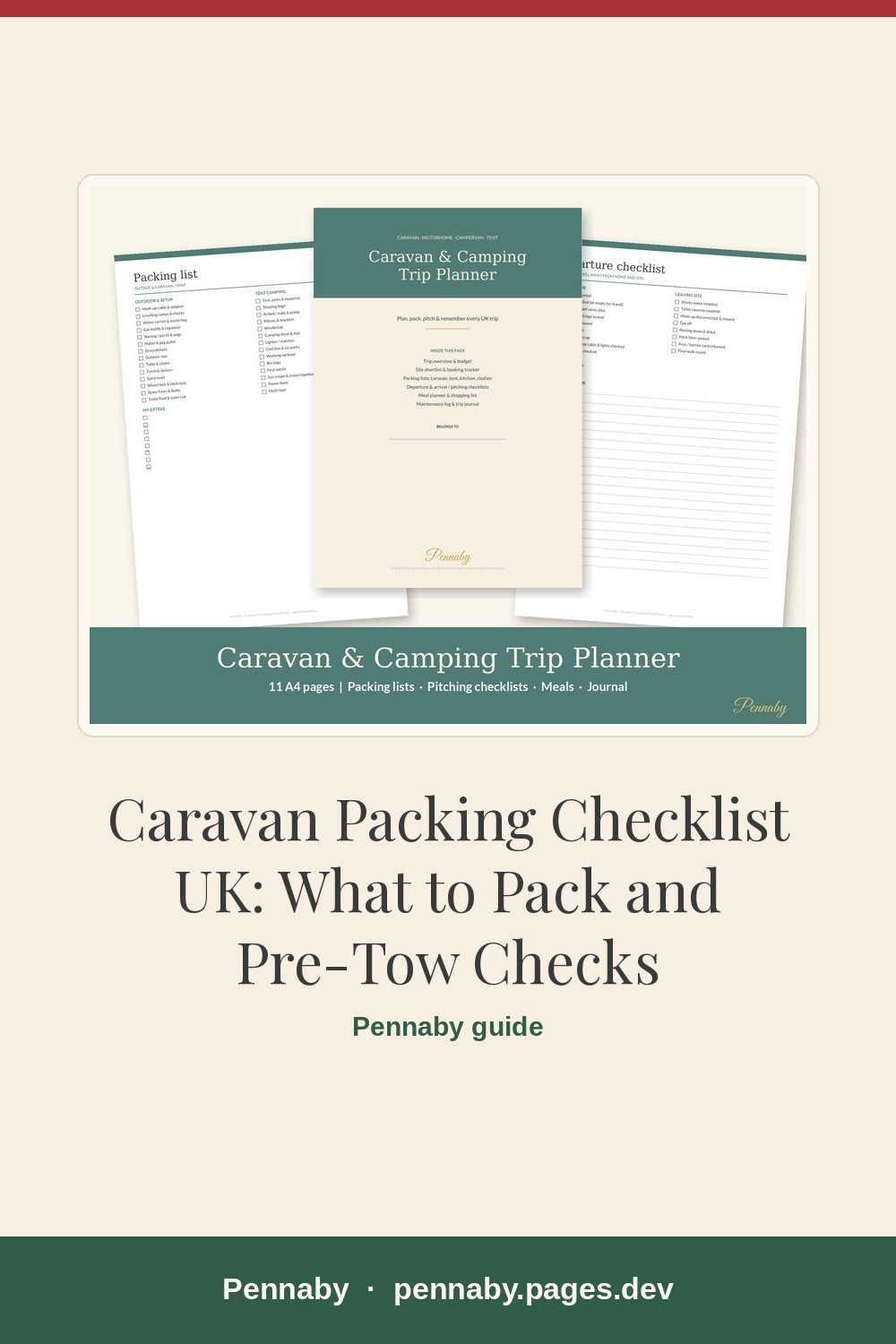
If you'd like all of this on paper, our Caravan and Camping Trip Planner (£4.07) has printable packing lists, pitching and departure checklists, a meal planner and a trip log for caravans, motorhomes and campervans. Print a fresh set for each trip, tick things off as you go and keep the trip logs as a record of where you've been.