Dog Vaccination Record UK: Jabs, Boosters and What to Keep
Code WELCOME20 gives 20% off at the Pennaby Payhip store.

Keeping a simple dog health record saves a lot of hunting through drawers when a kennel, groomer, dog sitter or new vet asks for proof of vaccinations. This guide explains which vaccinations dogs in the UK usually have, how often boosters tend to be given, what else is worth writing down, and why a single printed record helps. It is general information only, so always follow the advice of your own vet.
Core vaccinations for dogs in the UK
Most UK vets vaccinate dogs against four serious diseases as standard:
- Canine distemper, a viral disease that can affect the lungs, gut and nervous system
- Canine hepatitis (infectious canine hepatitis, caused by canine adenovirus)
- Canine parvovirus, which causes severe sickness and diarrhoea and is especially dangerous for puppies
- Leptospirosis, a bacterial disease spread through the urine of infected animals, often found in water and wet ground
Depending on where you live, how your dog spends its time and whether it goes into kennels, your vet may also suggest vaccines for kennel cough (often asked for by boarding kennels) and, for travel abroad, rabies.
Puppy vaccinations
Puppies normally have a primary course of two injections a few weeks apart. The first is often given at around 8 weeks old and the second a few weeks later, commonly at around 10 to 12 weeks, though the exact timing depends on the vaccine brand your vet uses. Your vet will tell you when your puppy can safely go out and mix with other dogs, which is usually a short time after the second injection. Write the date of each injection, the vaccine name and the date the puppy is fully covered in your record.
Booster vaccinations for adult dogs
Protection fades over time, so adult dogs need boosters. Many vets give a first booster about a year after the puppy course. After that, a common pattern is:
| Vaccine | Typical booster pattern (check with your vet) |
|---|---|
| Leptospirosis | Every year |
| Distemper, hepatitis and parvovirus | Often every three years after the first adult booster |
| Kennel cough | Usually every year, if your vet recommends it |
| Rabies (travel) | As set out on your pet's travel paperwork |
Because some vaccines are yearly and others are not, the annual vet visit can include different injections each year. That is exactly why a written record is useful: you can see at a glance what was given and when the next one is due.
Flea and worming treatments
Flea and worm treatments are not vaccinations, but they are just as easy to forget. How often to treat depends on the product, your dog's lifestyle and your vet's advice: some flea treatments are monthly, others last longer, and worming intervals vary too. Note the product name, the date given and the next due date each time, and set a reminder.
Microchipping
In England, Scotland and Wales, dogs must be microchipped by the time they are eight weeks old, and the owner's details must be kept up to date on a microchip database. Northern Ireland also requires dogs to be microchipped. Keep the microchip number and the database name in your dog's record so you can update your address or phone number quickly if you move.
What to keep in a dog health record
- Your dog's name, date of birth, breed, colour and microchip number
- Your vet's name, practice and phone number, plus pet insurance details
- Every vaccination: date, vaccine name, batch sticker if your vet gives one, and next due date
- Flea and worming treatments with dates
- Vet visits: the reason, any diagnosis, medicines prescribed and follow-up dates
- Weight checks, allergies and anything a sitter or kennel needs to know
Your vet will usually give you a vaccination card too. Keep it with your printed record, and ask the practice for a copy if you lose it.
Tips for keeping it up to date
- Fill the record in at the vet's reception while the details are fresh
- Put next due dates straight into your phone calendar or a wall calendar
- Take a photo of each completed page so you have a backup
- Bring the record when you book kennels, groomers or a dog sitter
A printable dog health record
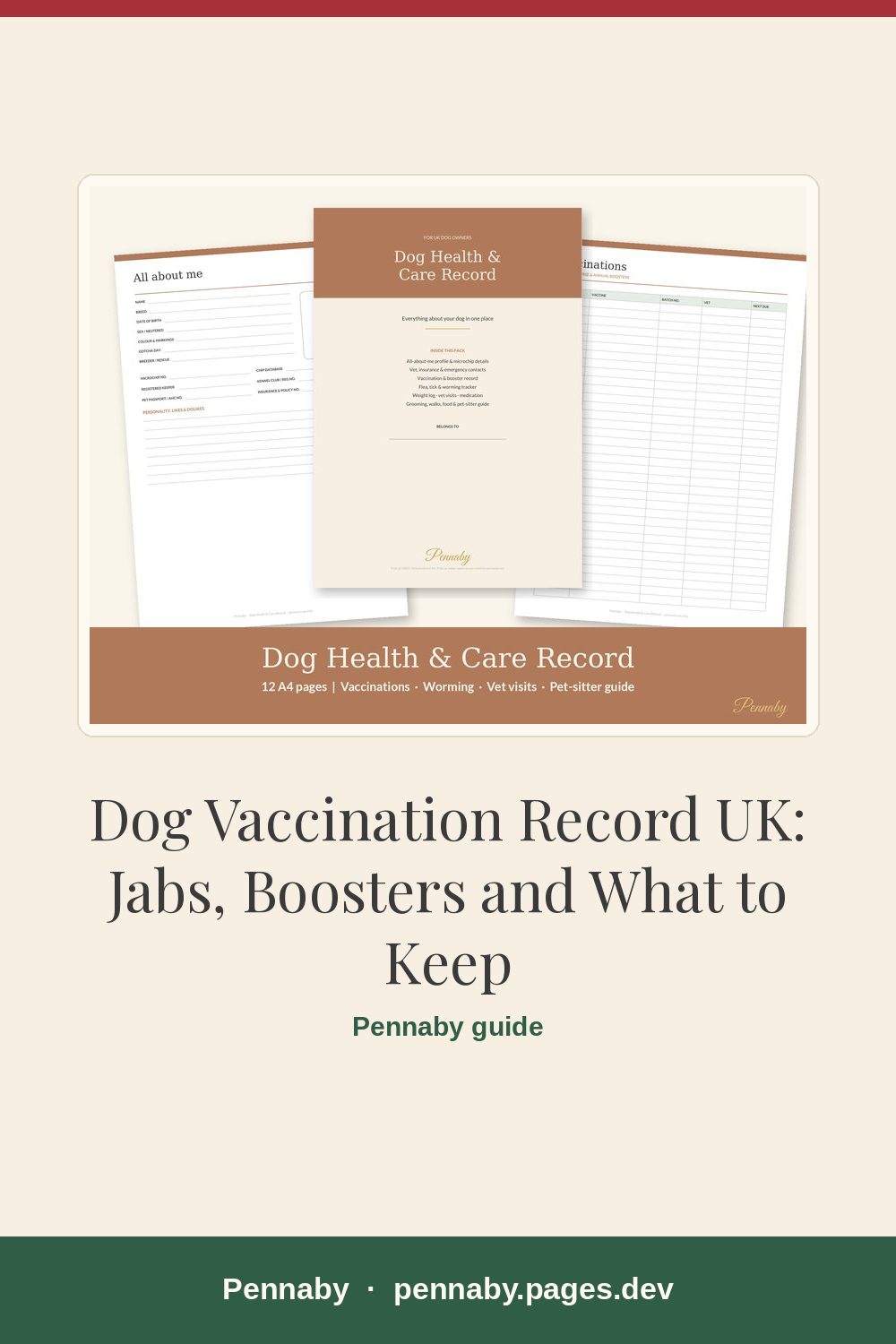
If you'd rather have it all in one place, our Dog Health and Care Record (£0.97) is an A4 printable with a vaccination log, flea and worming tracker, vet visit log and a pet sitter guide. Print it, pop it in a folder with your vaccination card and you're sorted.